
In the coffee world, coffee tasting is regarded as "coffee cupping". By definition, coffee cupping is a professional practice of observing and evaluating the tastes and aromas of coffee. The coffee taster attempts to measure aspects of the coffee's taste, specifically the body (the texture or mouthfeel, such as oiliness), sweetness (the perceived sweetness at the sides of the tongue), acidity (a sharp and tangy feeling at the tip of the tongue, like when biting into an orange), flavour (the characters in the cup), and aftertaste. (See INeedCoffee for a detailed textbook cupping procedure)
In practice, it's better to ask Joseph for more insights from his coffee cupping experience by organizing countless cupping sessions for clients...
During coffee cupping, what should be identified?
The fragrance nuances of the dry grounds immediately after grinding; the aroma nuances of the brew after adding water; and the nuances as the coffee cools under the following categories: acidity, mouthfeel, taste, and aftertaste.Well-produced coffees exhibit a range of flavor and aroma that is likely much broader than the world of wine. Citric, floral, and spicy coffees occur at a great range of textures. Coffee at this level can be bafflingly complex.
 |
| Adding water to the dry coffee ground |
 |
| A line-up of different coffees waiting to be slurped up and rated by coffee tasters |
 | |
| Joseph focusing in smelling the aromas of the brew |
(There are thousands of flavors in coffee that could be identified. In real practice, even for the same coffee, differentiated flavors might be noted subjectively by different tasters. Joseph has therefore established a unique "taste profile" system to help customers choose Ninety Plus' coffees.)
The Taste Profile
Coffees of Ninety Plus are categorized into W2, H2, N2, SK representing different levels of fruitiness (from low to high). Logos of the Ninety Plus Taste Profiles include Nekisse N2, Hachira N2, Tchembe N2, Kemgin W2, Perci N2, Lycello W2, Juliette H2, Lotus SK and Sillvia SK, which of those are guarantees of specific taste quality and also of adherence to NP's own protocol for producing and processing coffee.Now let's look at the taste profiles of 2 NP coffees to understand how this system relates the coffee logo with its taste (click to enlarge). Very smart way of branding and labeling the coffees!

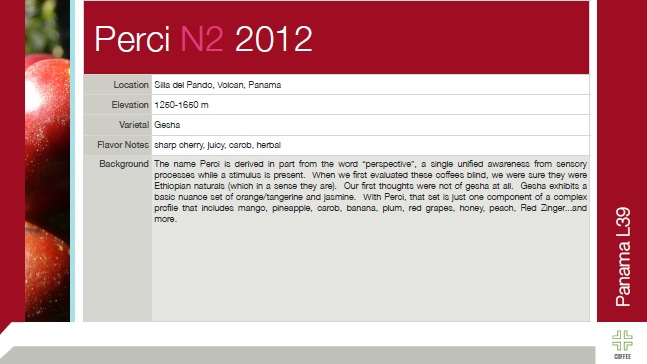
Joseph, in your opinion, what do you consider as perfect coffee?
There is no perfect coffee any more than there is a perfect food or a perfect wine. There are foods better suited for some than others, and most desirable at certain times versus others.The perfect coffee for me is a coffee that further illustrates what is possible in coffee flavor. At Ninety Plus this is our work and journey.
What are the upcoming coffee trends we should note as a consumer or coffee-lover?
We call it the evolution of the Comparative Coffee Culture. Responding to our own excitement and vision of coffee's potential, many industry professionals have been changing things over the past decade or so, creating solutions for producing, roasting, and retailing coffees that open up this this exploration of flavor to the end user.Coffee lovers should expect very high quality coffees to be more available by the cup from better educated local retailers who themselves will continue to push the industry forward with coffee brewing innovation.
Is there any labeling indicating specific coffee processing methods consumers could find in the market?
There are no such labelings as of yet as this science and equipment is in a very early phase. The equipment actually must be developed which processes coffee for flavor rather than for commodity and consistency.We are developing equipment at Ninety Plus Gesha Estates in Panama, including a solar profile dryer called Solkiln™.
That's very forward-looking Joseph! And we can't wait to taste more new NP product by your innovative processing methods.
Coffee and the environment
Last but not least, one question that concerns me as of coffee planting is its ecological impact to the environment. Luckily Joseph gave me a very relieving answer...:)"The way we produce coffee is non-intensive. The best coffee flavor actually results from coffee which matures slowly, under the shade of forest. Yields are much lower, but quality and higher market price can drive conservation and improvements in the environment where Ninety Plus coffees are grown. At our farm in Panama, we are replanting and stewarding forest with our coffee."
 |
| Ninety Plus Gesha Estate |
Thank you very much, Joseph Brodsky of Ninety Plus Coffee, for sharing valuable producer's insights to us end customers. We now have much more understanding to coffee other than just the presentation as in Cappuccino or Espresso, but the whole universe of flavors and processing methods to come to the coffee at the end.
Learn more and engage with Ninety Plus Coffee here.
Ninety Plus Coffee in Hong Kong
If you are interested in having a cup of NP's coffee in Hong Kong, I recommend you to visit this modest yet surprising cafe in Mongkok. You could also buy home-roasted or green coffee there:Knockbox coffee company
G/F, 21 Hak Po Street, Mong Kok, Kowloon


